Starting point
A specialist works with dozens of children at once. A parent messages them in the evening: what do I do if my child refuses the task again? The answer comes tomorrow, or the day after. The specialist isn’t bad at their job — they simply don’t have the time.
And by then, half of what the specialist explained in the last session has already been forgotten.
Two connected solutions grew out of these two problems: a sessions service inside FlyMind, and a digital twin of the specialist that learns from those sessions.
How it was
Sessions happened anywhere: Zoom, Google Meet, Yandex Telemost. Booking happened through messenger chats. The specialist recorded the outcomes by hand, and in ABA centers this turned into endless Excel spreadsheets.
As a result, everything said in a session lived in the specialist’s head, in scattered notes and in the memory of a tired parent. Nobody had the full picture.
Part 1. The sessions service
Booking: 29 states
The hardest part wasn’t the video call — it was booking. A parent sends a request, the specialist accepts, someone reschedules, someone cancels, the payment goes through or fails, the session is ready to join or not yet. When I mapped out all the scenarios, a single booking had about 29 states.
Separately, we had to decide when to charge the parent. At the moment of the request, the parent pays for something the specialist hasn’t confirmed yet. After the session, the risk of non-payment grows. We settled on this: when the request is sent, the money is put on hold, and it’s only charged once the session actually happens. The parent never pays for something that didn’t happen, and the specialist knows the payment is there.
The key decision: everything goes into the chat
The 29 states could have been spread across screens, badges and notifications. But then both parent and specialist would drown in the interface.
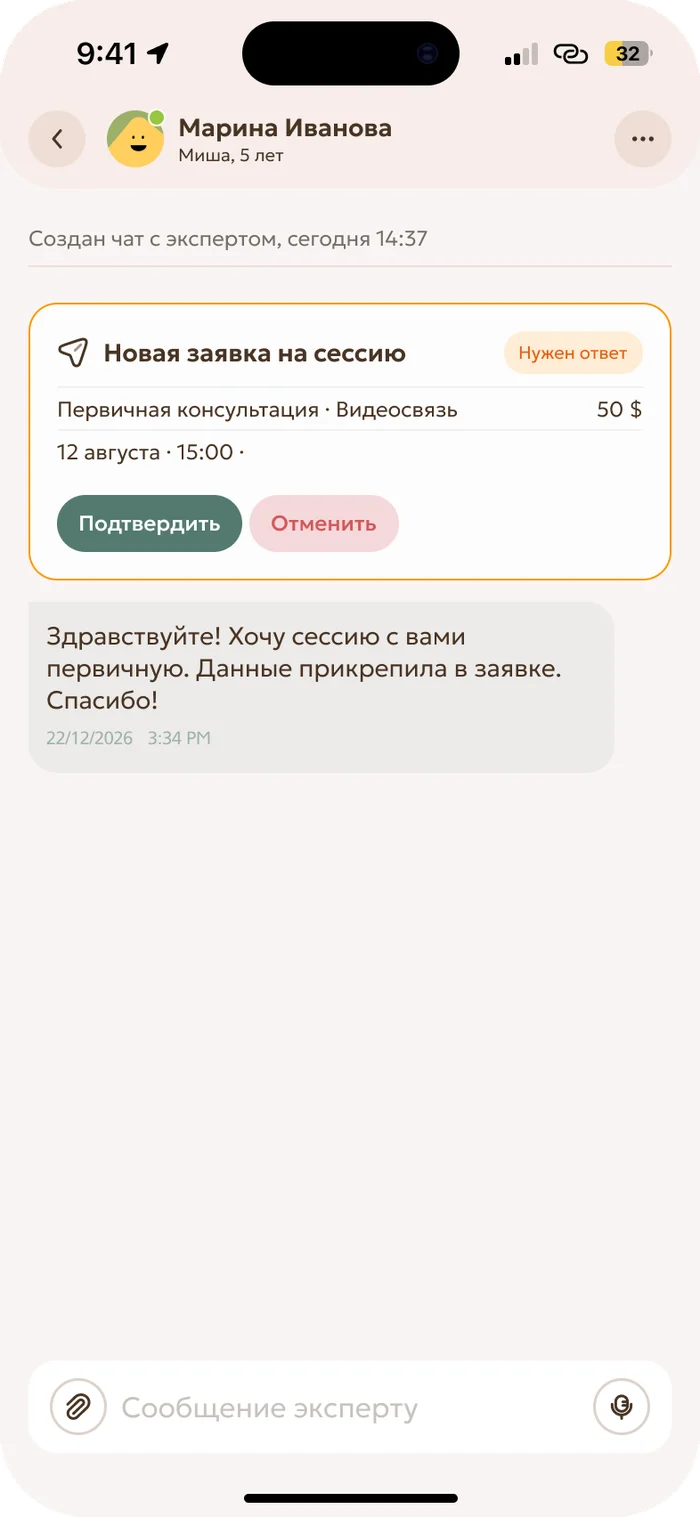
I went another way. When a parent and a specialist book a session, a shared chat opens for them. Everything that happens with the booking arrives there: confirmations, reschedules, payment statuses, reminders. When the session is about to start, a join button appears in the chat.
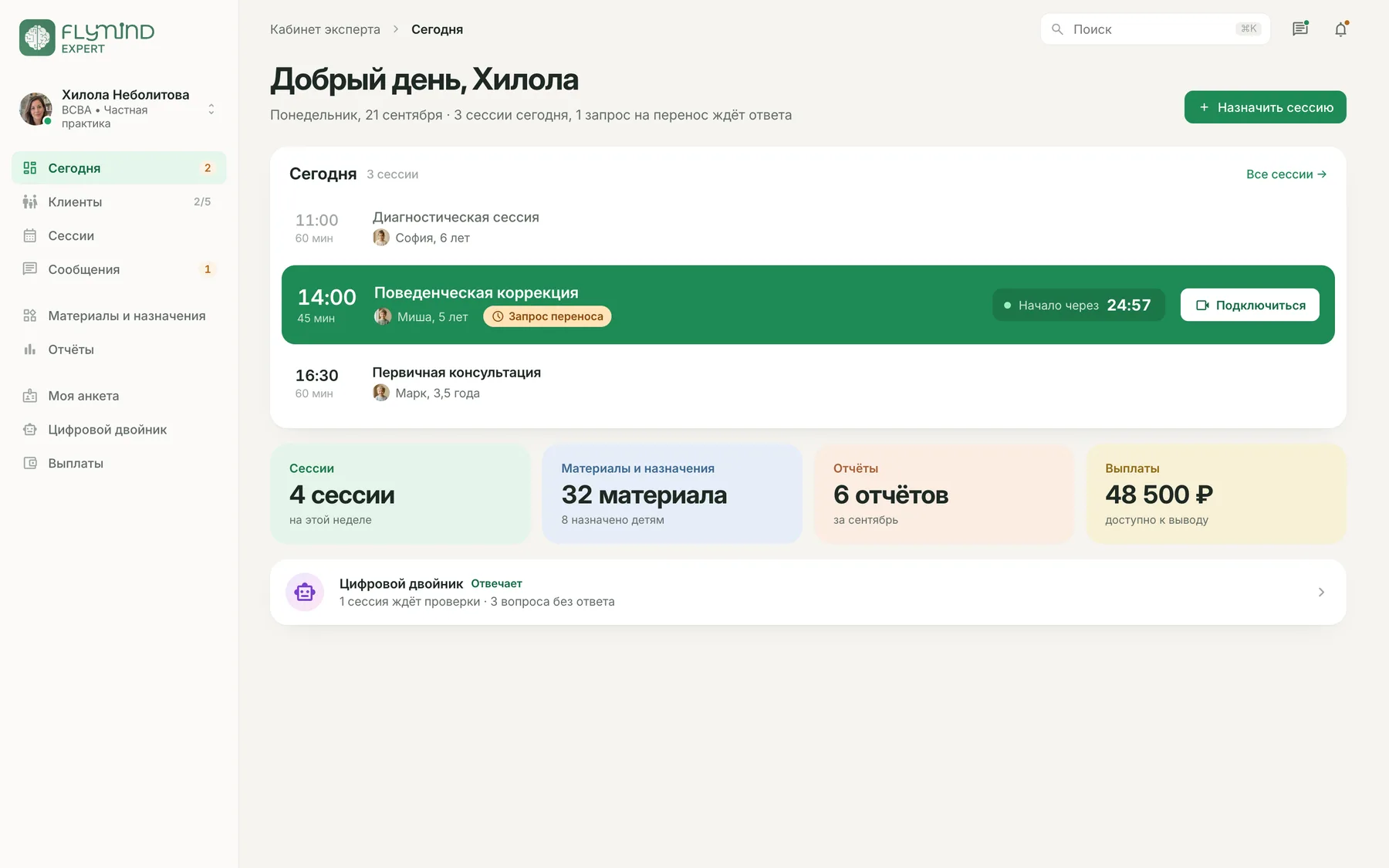
The chat became the single hub of interaction: messages, statuses and the way into the session, all in one place. And, as it turned out later, it’s also where the twin lives.
A new session request also arrives right in the chat — as a card with “Confirm” and “Decline” buttons. The specialist doesn’t need to go to a separate bookings section.
The session and the summary
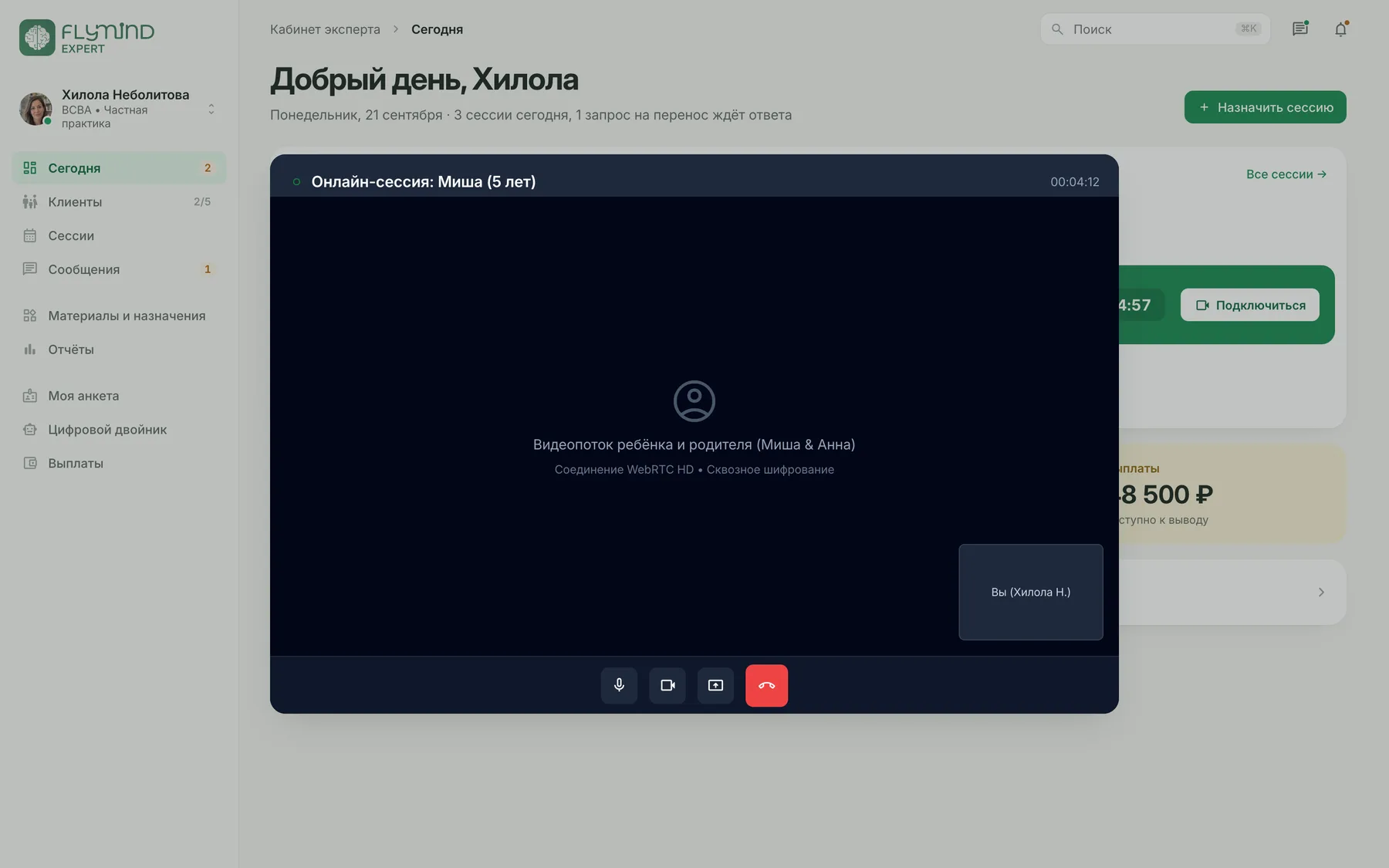
The video call runs right inside the product: our engineering team built this video service. Before every session we ask for consent to record and transcribe.
After the session, the recording is transcribed, and the summary goes to the specialist first, not to the parent. The specialist gets a notification, reviews the result, and only then taps “Send to parent”. This is a deliberate decision: AI writes the draft, but a human is accountable to the parent.
What the specialist sees:
- a summary of the session with key points highlighted as chips;
- a separate block: “what your twin learned in this session”.
The parent gets the summary and key points, but doesn’t see the block about the twin’s learning. That’s the specialist’s internal kitchen.
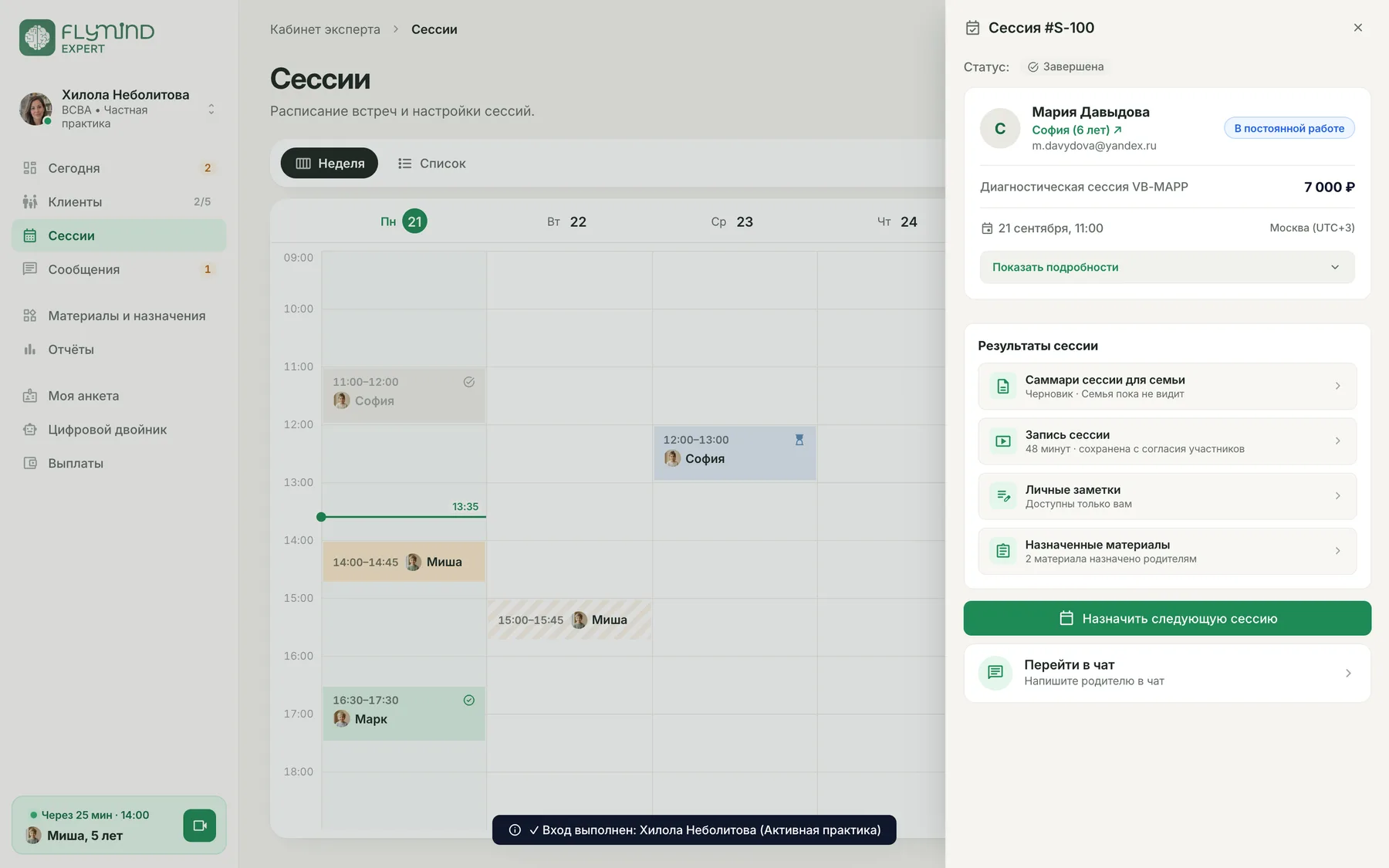
Besides the summary for the family, the specialist has the session recording (only with participants’ consent), private notes visible only to them, and assigned materials. The next session can be booked from here in one click.
Result
The service launched recently, so there aren’t many sessions yet. But the feedback has been very positive: specialists point out how convenient and fast it is.
The link: every session is knowledge
At this point the main insight became clear. A session isn’t just a call. It’s the specialist’s knowledge, said out loud and saved in the system. If you collect it, you can train an assistant that answers parents while the specialist is busy.
Part 2. The specialist’s digital twin
The twin is an AI that learns from a specific specialist’s sessions and materials and answers parents in the shared chat while the specialist is unavailable. Below are the key decisions that shaped how it works.
1. Continuous context
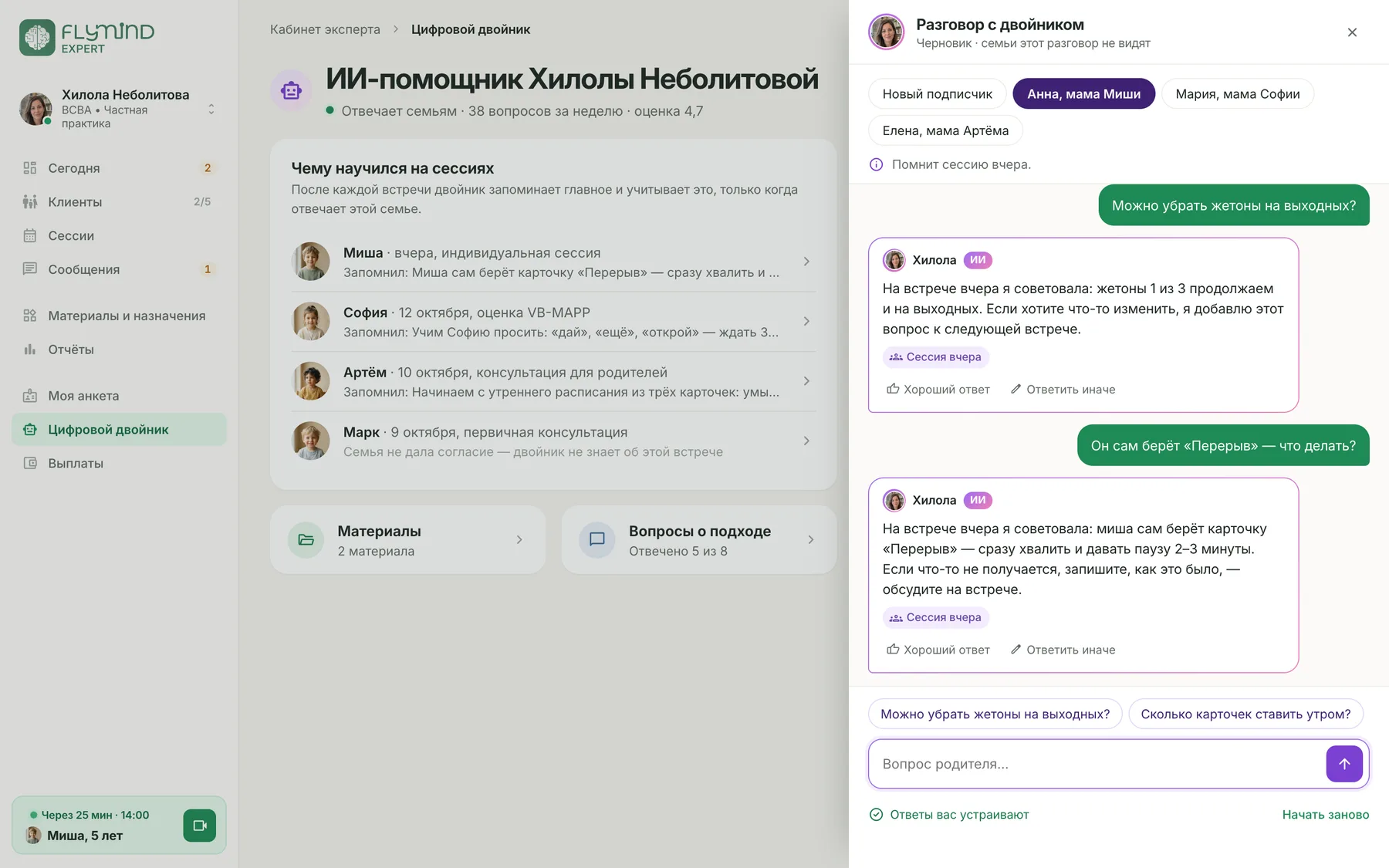
The session ends, the specialist approves the summary — and the twin already knows what happened in it. A parent can come to the chat an hour or a week later and pick up the conversation where it left off: the twin will remind them of the homework the specialist gave, the decisions they made, what they agreed to do with tokens.
For the parent, the conversation doesn’t end when the call does — it continues.
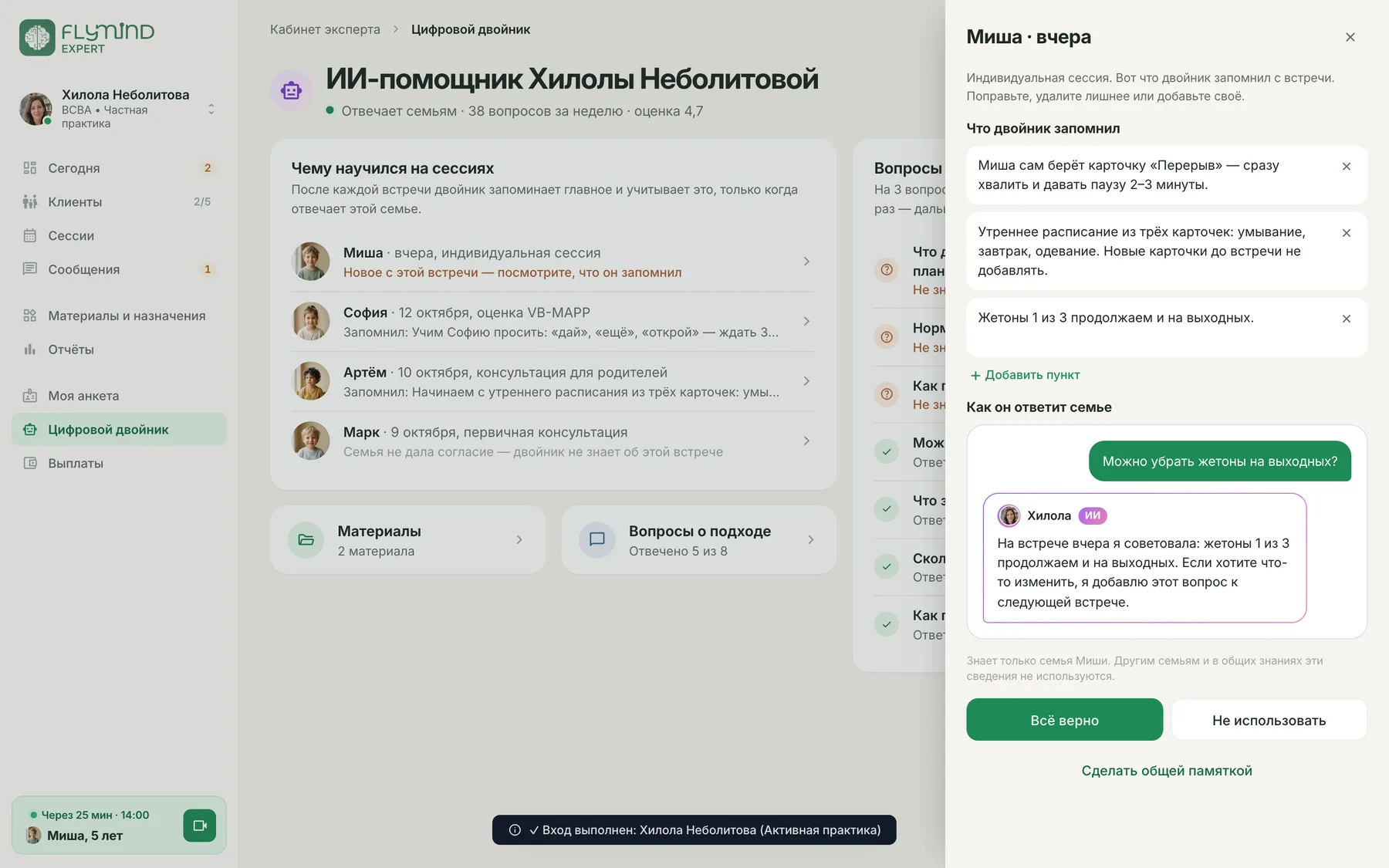
But the twin doesn’t memorize a session silently. After the meeting, the specialist sees a list of what the twin took away from it: they can remove what’s unnecessary, add their own point, and immediately preview how the twin would answer the family. Then — “All correct”, “Don’t use”, or “Make it a shared note” for all families.
One more boundary: if a family didn’t consent to recording, the twin knows nothing about that meeting.
2. Transparency
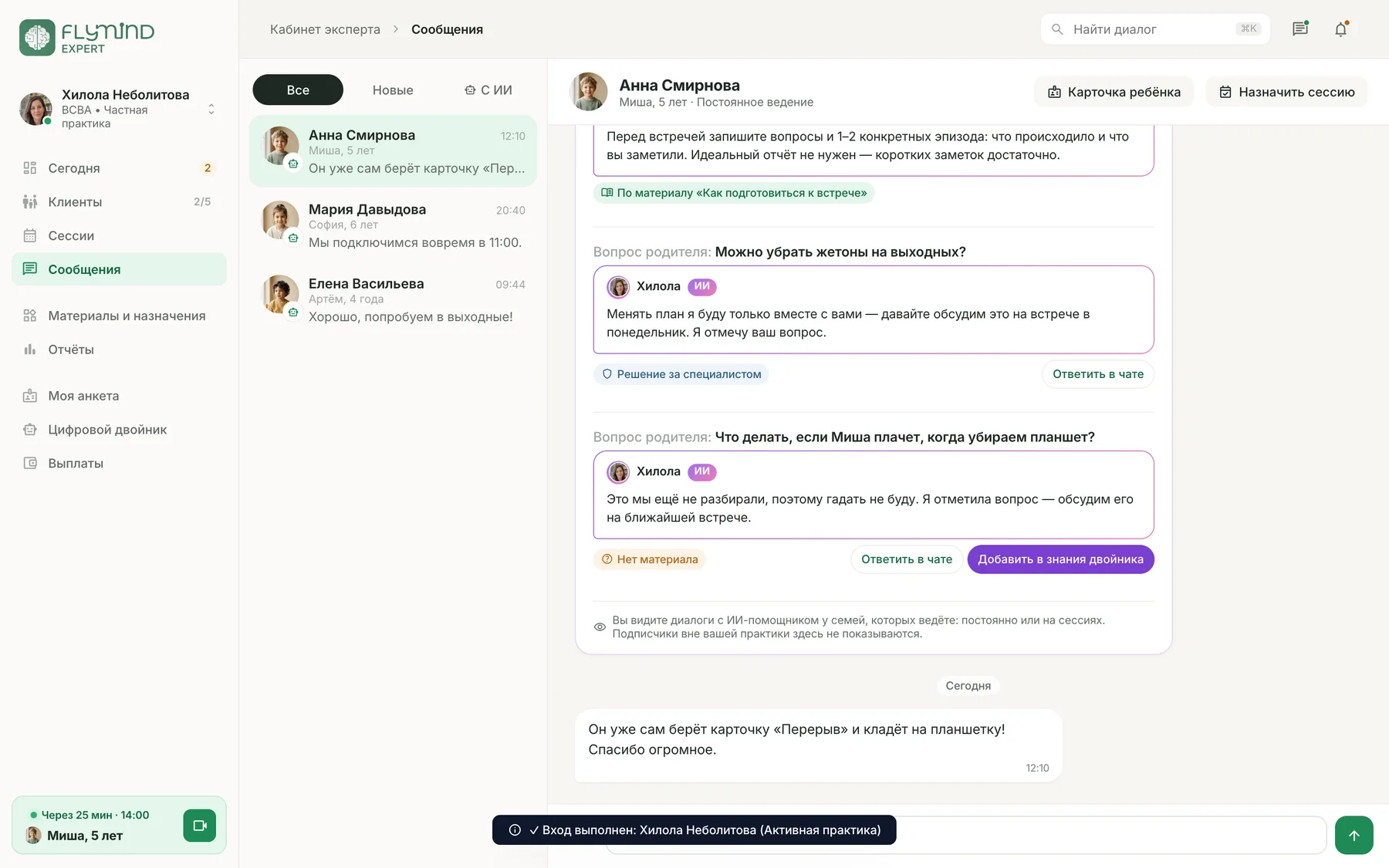
The parent always knows when they’re talking to AI. We’re legally required to label it, and I turned the requirement into a clear interface: the twin’s messages carry an AI badge, and the bubbles themselves look different from the real specialist’s messages. You can’t mix them up.
3. Boundaries
The twin answers right away only when it knows the answer and the context. If it doesn’t, it doesn’t make things up — it says directly: “I don’t know the answer, I’ll call the specialist” — and sends the specialist a notification.
There’s also a hard boundary on content. The twin doesn’t diagnose or treat; it has no medication or medical advice. Its role is to support the parent in a hard moment and to be the specialist’s “second brain”.
It can help with a child’s challenging behavior — but only with evidence-based tools. The twin takes them from two sources: the specialist’s own materials, and FlyAI — our AI trained on verified methodological materials and the experience of other experts. It’s FlyAI that helps tell evidence-based methods apart from everything else. No advice “of its own”.
And most importantly: the twin’s autonomy is limited on purpose. It can’t suggest anything that could harm the therapy.
4. The specialist is in control of the twin
The specialist sees every answer the twin gives and can correct any of them. Corrections aren’t lost — the twin learns from them.
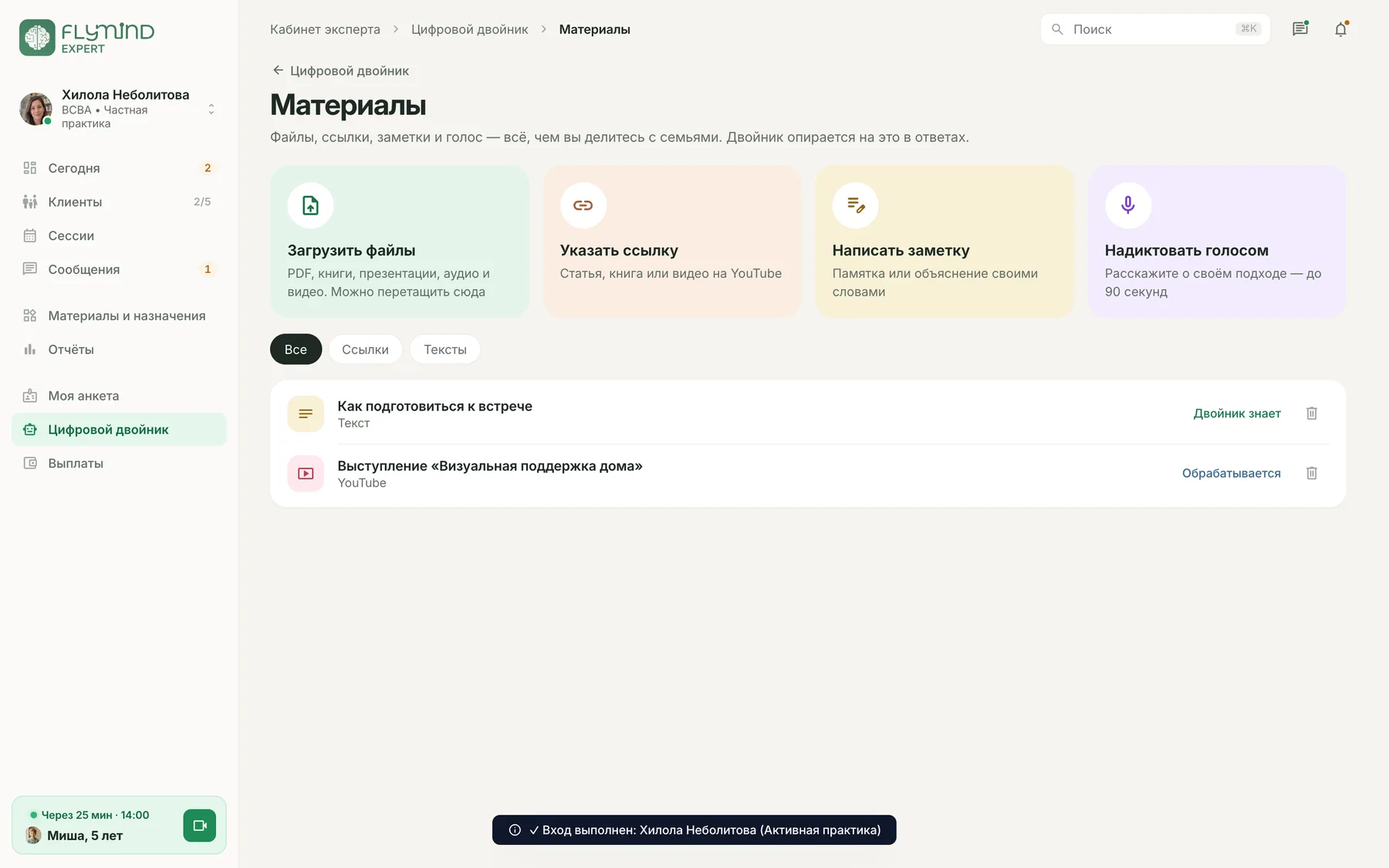
The twin can also be trained directly: upload lectures, videos, documents, or simply say something by voice. From this, the twin picks up not only knowledge but the manner of speaking — the specialist’s characteristic words and phrases. So the parent isn’t talking to a faceless AI, but to an assistant that sounds like their specialist.
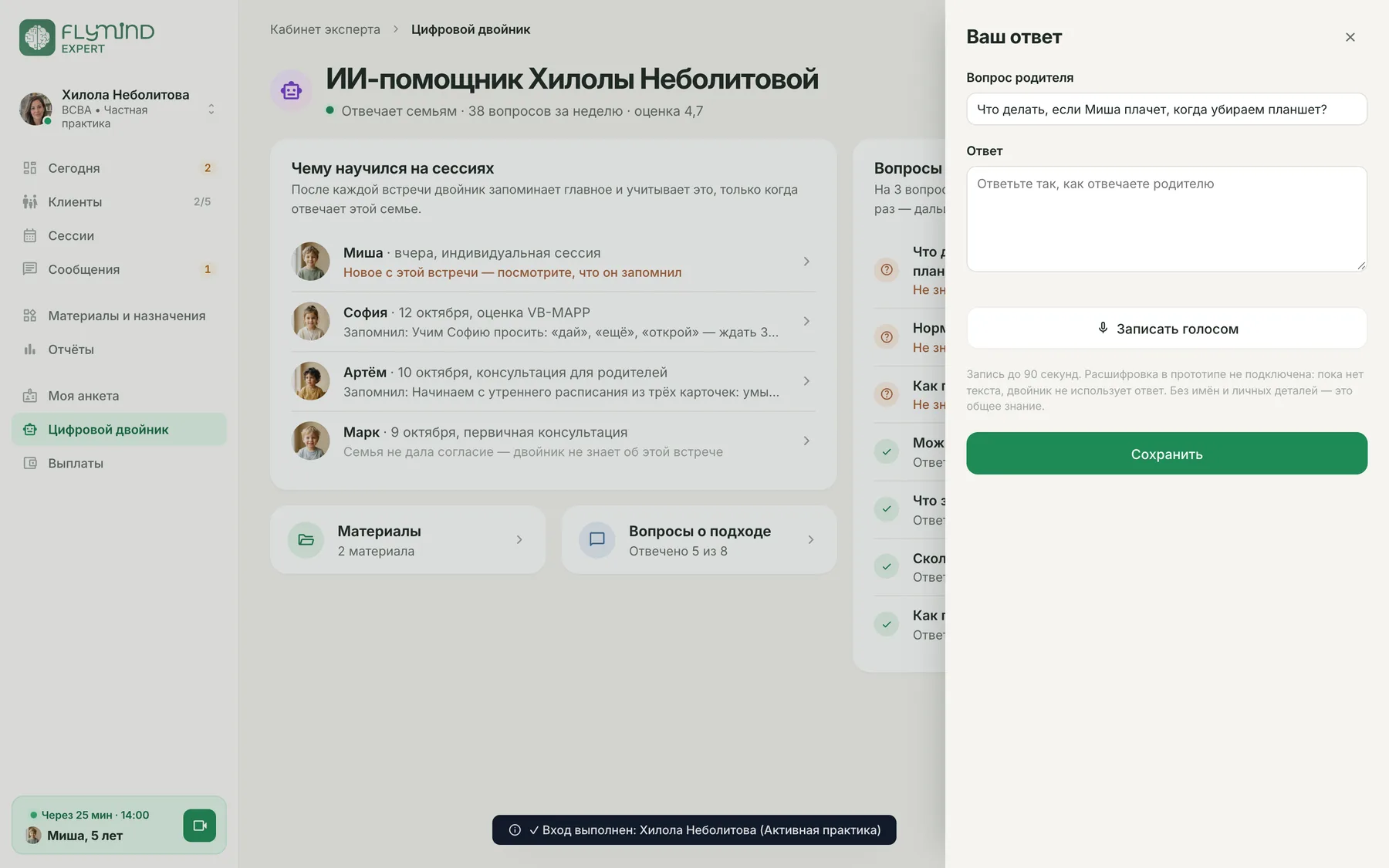
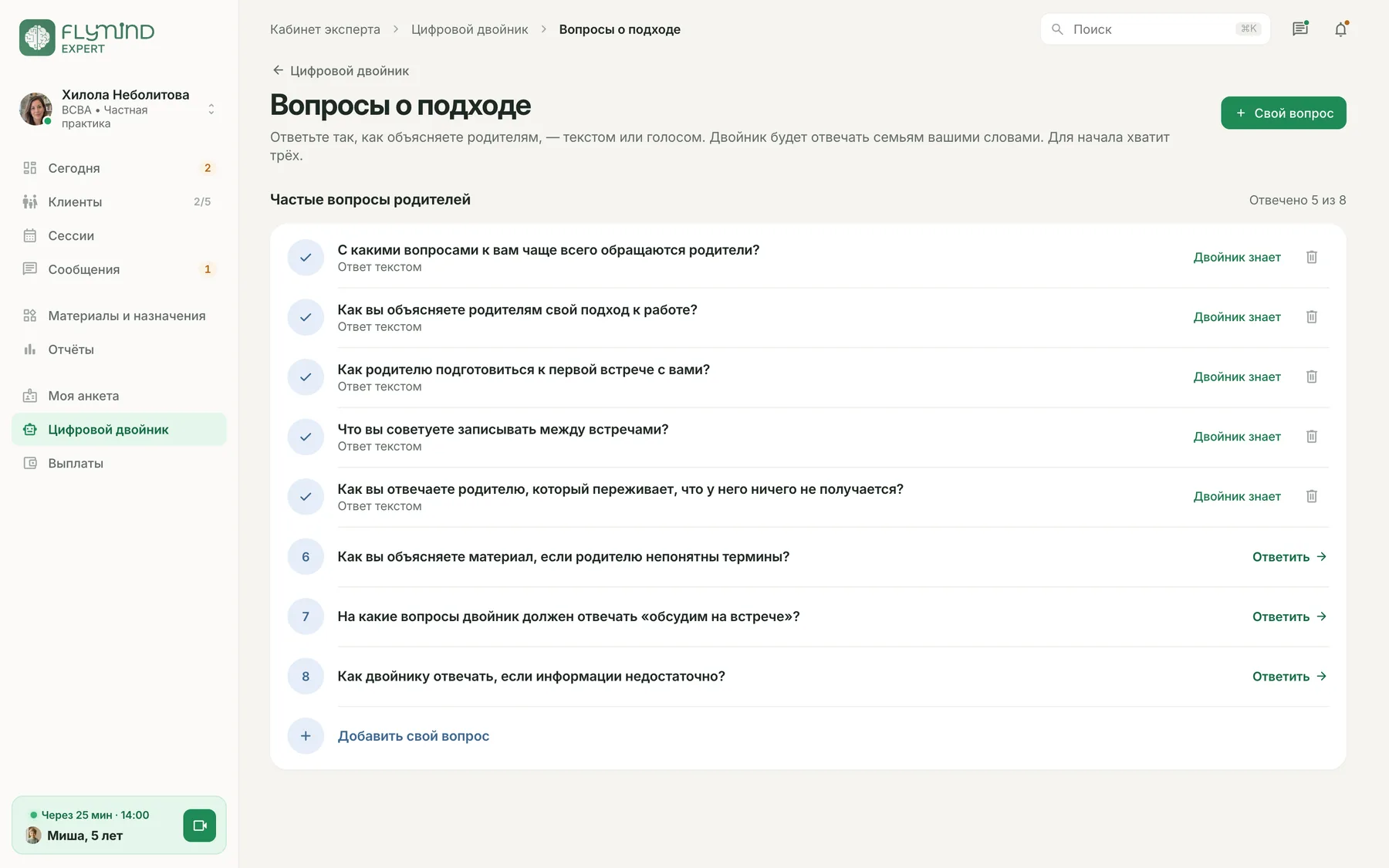
So the twin doesn’t start from zero, onboarding works like a short interview: the specialist answers parents’ frequent questions about their approach — in text or by voice. Three answers are enough to start.
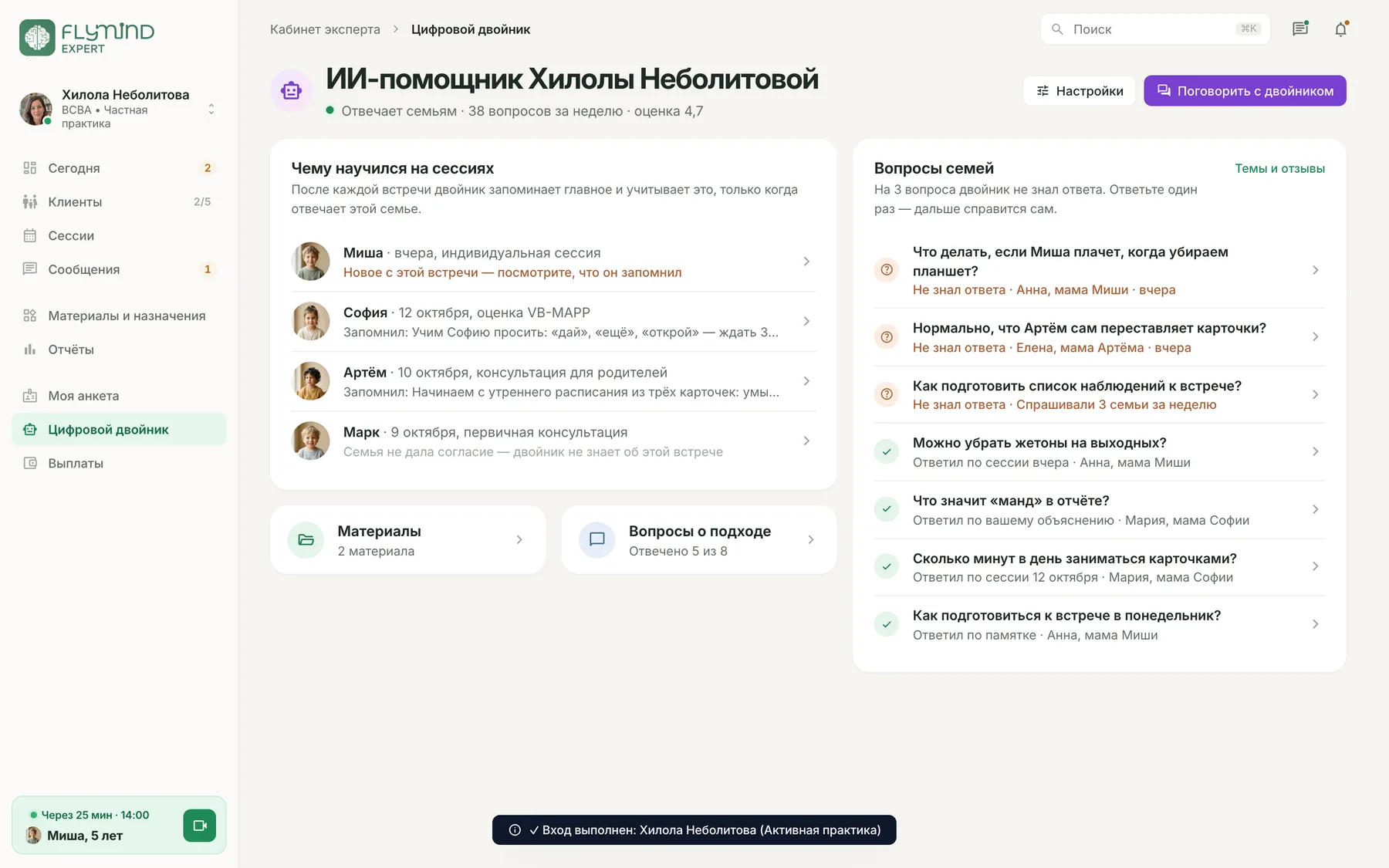
Questions the twin couldn’t answer are collected into one list. The specialist answers each of them once, and from then on the twin handles it on its own.
Before letting the twin talk to families, the specialist can talk to it themselves in draft mode — ask a question the way a parent would — and rate the answer: “Good answer” or “Answer differently”.
In the chat with a family, the twin’s answers are labeled right in the specialist’s view: “Specialist’s call” if the twin deferred a decision until the next meeting, or “No material” — with an “Add to twin’s knowledge” button.
Status
The twin is currently in testing and will launch soon. I’ll update this case once there’s real usage data.
What I took away
In AI products, the hardest part isn’t the technology — it’s trust. The parent needs to know when they’re talking to AI. The specialist needs to stay in control of what is said to parents on their behalf. And AI needs honest boundaries: saying “I don’t know” is better than answering confidently and wrong.
The second takeaway is simple: sessions and the twin are stronger together than apart. Sessions give the twin knowledge; the twin extends the value of each session. Every new meeting makes the specialist’s assistant a little smarter.